


Tektite — a stone with a cosmic origin story: hundreds of thousands of years ago, massive meteorite impacts melted earthly rock, hurled it into the atmosphere — and back to Earth came black natural glass in the rain. In lithotherapy, tektite is regarded as a stone of transformation and personal development. In this guide, you’ll find everything about the reported effect of tektite, its meaning, application, proper care, and an authenticity check — concise, honest, and compiled by a specialist retailer.
Tektite — quick facts at a glance
| Mineral class | natural impact glass — rock melted by meteorite impacts and solidified into glass |
| Color | black to dark brown, matte, with a typically pitted surface |
| Hardness (Mohs) | 5.5 to 6.5 |
| Crystal system | amorphous — glass without a crystal lattice |
| Chakra | Root Chakra (Muladhara) |
| Zodiac sign | Scorpio and Sagittarius (main) |
| Element | Fire |
| Special feature | formed by meteorite impacts — the well-known Indochinites are around 790,000 years old; the green Moldavite is also a tektite |
| Suitable for gemstone water | Unusual — tektite is traditionally worn directly on the body |
| Sunlight | Not sensitive — according to tradition, it is still classically charged in moonlight |
| Main locations | Southeast Asia (Thailand, Vietnam, China), Australia, Czech Republic (Moldavite), Ivory Coast, USA |
What is tektite? Mineralogy and origin
Tektite is not an ordinary mineral, but natural impact glass: when large meteorites struck, earthly rock was suddenly melted, hurled kilometers through the atmosphere, and solidified in flight into glassy, often drop- or disc-shaped bodies. The name comes from the Greek tektos = melted.
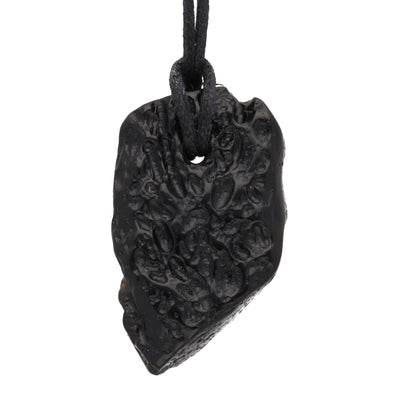
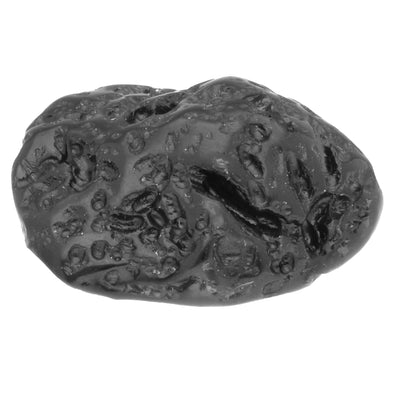
Tektites are amorphous — as glass, they have no crystal lattice. Typical features are their matte, black-brown color and the pitted, grooved surface that formed during flight through the atmosphere and over millennia of weathering.
The best-known occurrences form so-called strewn fields: the Indochinites from Thailand, Vietnam, and southern China were created by a massive impact around 790,000 years ago. Other tektites are the Australites (Australia), the Bediasites (USA) — and the famous green Moldavite (Moldavit) from the Czech Republic.
Meaning & history
The term “tektite” was coined by geologist Eduard Suess around 1900. In Asia, however, the black glass stones had long been known and prized: in Tibetan and Southeast Asian traditions they are regarded as “Agni Mani” — “pearl of the sacred fire” — and were worn as lucky and protective stones.
Their cosmic origin still makes tektites something special today: they connect — quite literally — heaven and earth. Earthly rock transformed by cosmic energy.
In modern lithotherapy, tektite is regarded as a stone of transformation: it is said to accompany change, promote personal development, and help one stay grounded while remaining open to new things.
Reported effect of tektite on the psyche
When someone asks us for a stone for new beginnings, upheavals, or the next step in development, tektite is a special recommendation. In lithotherapy, it is said to have the following effects attributed to it:
- Change & development: The core of its tradition — tektite is said to accompany change and trigger personal growth.
- Clarity & determination: Often used to see goals clearly and pursue them consistently.
- Grounded & open at the same time: Said to help keep both feet on the ground while remaining open to new impulses.
- Letting go: Said to support leaving the old behind — like rock reshaped in fire.
- Vision: Its cosmic origin symbolically stands for looking beyond one’s own horizon.
- Courage for a new beginning: Considered a companion for anyone starting a new chapter.
Tektite is therefore especially suited to phases of change, new beginnings, and developmental steps — and to people who do not fear change, but want to shape it.
Reported effect of tektite on the body
In traditional lithotherapy, tektite is attributed the following physical effects — these statements come from traditional descriptions and are not a substitute for medical diagnosis or treatment.
- Nerves & brain: In traditional lore, tektite is said to have an invigorating effect on the nerves and brain.
- Alertness: Associated with mental freshness and quick comprehension.
- New energy: Considered an energizing stone that is said to set stagnant conditions in motion.
- Grounding: Despite its “cosmic” origin, it is experienced as grounding — stability as the basis for change.
Tektite is traditionally worn directly on the body — most beautifully as an pendant or tumbled stone carried with you during times of change.
Tektite and the chakras
In chakra teaching, tektite is assigned to the Root Chakra (Muladhara) — the energy center for grounding, stability, and primal trust. That may be surprising for a stone with such a “cosmic” history, but it is logical: change works best from a stable foundation.
In tradition, tektite is regarded as a bridge between heaven and earth: rooted below, open above. It is said to strengthen grounding while opening the view ahead.
In practice, tektite is carried in the pocket, held in the hand during meditation, or placed on the lower abdomen.
Tektite & the 7 main chakras
Tektite is a Root Chakra stone with a cosmic history — it is said to ground and at the same time make one open to new things.
Tektite and the zodiac signs
Astrologically, tektite is considered a main stone for Scorpio and Sagittarius. For the deeply introspective Scorpio, it is said to help with transformation and letting go — change is its life theme. For Sagittarius, it is said to grant vision and determination on the path ahead.
As a stone of transformation, tektite suits every zodiac sign that is facing a new beginning or wants to take a developmental step.
Using tektite in everyday life
1. In the pocket — the companion through change
A tektite in your pocket is the classic application — a tangible symbol of change that you carry with you in times of transition.
2. As a pendant — for the path of development
Worn directly on the body, tektite is said to provide lasting grounding and keep openness to new things alive.
3. In meditation — connecting heaven and earth
Held in both hands, tektite is said to help you feel grounding and vision at the same time.
4. When making decisions
Traditionally used to gain clarity about the next step and act with determination.
5. On the desk — for fresh impulses
A tektite in view is said to set stagnant thoughts in motion.
Tektite bei Lebensquelle Plus
Echte Naturqualität — versandfertig aus Waldbröl, geprüfter Fachhandel.
Clean and recharge tektite
Clean & recharge tektite
As natural glass, tektite is uncomplicated — simple, regular care is enough.
Discharge
Discharge in a bowl with hematite tumbled stones — gentle and reliable.
Alternatively, rinse briefly under lukewarm running water and dry it.
Recharge
Recharge in moonlight or on rock crystal chips.
Rock crystal is considered the ideal amplifier for the “sky stone”.
Recognizing authenticity
Especially with tektites (and particularly with expensive Moldavite), glass fakes are common. These features help:
- Pitted surface: genuine tektites show the typical pits, grooves, and dimples (regmaglypts) — smooth, shiny surfaces are suspicious.
- Matte appearance: tektite looks matte black-brown; a highly glossy “obsidian finish” points to melted industrial glass.
- Transmitted-light test: at thin edges, many tektites shimmer brownish through — a strong green, bottle-glass-like glow in “Moldavite” offers is a warning sign for fakes.
- No gas-bubble patterns: cast fakes often show uniform round bubbles and flow structures like bottle glass.
- Weight & feel: tektite feels compact and cool in the hand — plastic is too light and too warm.
Genuine tektite is matte, pitted, and unmistakably rough. At Lebensquelle Plus, tektites come from verified natural quality — no melted glass.
Combining tektite with other stones
- Tektite + Obsidian — two natural glasses — cosmic fire meets volcanic depth.
- Tektite + Smoky Quartz — grounding for change — stability in times of transition.
- Tektite + Rock Crystal — rock crystal clarifies and amplifies the developmental impulse.
- Tektite + Labradorite — change meets intuition — for transitions and new paths.
- Tektite + Hematite — maximum grounding — so that change succeeds safely.
Frequently asked questions about the effect of tektite
01 What does tektite do? +
In lithotherapy, tektite is considered a stone of transformation and personal development. It is said to have an invigorating effect on the nerves and brain, promote clarity and determination, and help one stay grounded while remaining open to new impulses.
02 How is a tektite formed? +
By meteorite impacts: the impact melts earthly rock, hurls it into the atmosphere, and the melt solidifies into glass in flight. The well-known Indochinites from Southeast Asia formed this way around 790,000 years ago.
03 Is tektite a meteorite? +
No — a common misconception. Tektite consists of earthly rock that was melted by the impact of a meteorite. It is therefore the “child” of an impact, not the meteorite itself.
04 What is the difference between tektite and Moldavite? +
Moldavite is a tektite — the rare green variety from the Czech Republic, formed during the Ries impact around 15 million years ago. The black-brown tektites from Southeast Asia (Indochinites) are much more common and more affordable.
05 Which zodiac sign is tektite for? +
Tektite is mainly assigned to Scorpio and Sagittarius — Scorpio for transformation, Sagittarius for vision and determination. As a stone of change, however, it suits anyone facing a new beginning.
06 Can tektite go in water? +
A brief rinse for cleaning is no problem — tektite is stable natural glass. For gemstone water, however, it is unusual; traditionally it is worn directly on the body.
07 How do I recognize genuine tektite? +
Genuine tektite is matte, black-brown, and has a pitted, grooved surface. Smooth, shiny pieces, bottle-green glow (in supposed Moldavite), or uniform gas bubbles indicate melted industrial glass.
08 Which stones go well with tektite? +
Classic combinations: tektite + Obsidian (the natural-glass combo), tektite + Smoky Quartz or Hematite (grounding through change), tektite + Rock Crystal (clarity & amplification), tektite + Labradorite (intuition in transitions).
09 Is tektite suitable as a gift? +
Very much so — a stone with a cosmic origin story is a special gift for people in phases of change: job change, moving house, new beginnings. The story comes free on top.
Conclusion
Tektite — natural glass with a cosmic history. In lithotherapy, the stone for change, clarity, and development: stay grounded, stay open, take the next step. Anyone looking for a companion through upheavals and new beginnings will find in tektite a true piece of Earth and sky history.
In our tektite assortment ↗ you’ll find pendants and tumbled stones in genuine natural quality — ready to ship from Waldbröl or directly on site in our store in Nümbrecht.
Important note: The effects described here come from traditional lithotherapy and are not scientifically proven. They do not replace medical diagnosis or treatment. If you have health concerns, please consult a doctor.
Further gemstone guides
- Obsidian effect — meaning, application & cleansing
- Smoky Quartz effect — meaning, application & care
- Clean and recharge gemstones — the easy way
- Labradorite effect — meaning, application & cleansing
- Rock Crystal effect — meaning, application & cleansing
- View all tektite products