


Chalcedony shimmers in delicate light blue to gray-blue — a gentle, mild stone that was already valued in antiquity as the “speaker’s stone.” In crystal healing, blue chalcedony is regarded as the stone of calm, balance, and gentle communication — a classic throat chakra stone. In this guide, you’ll find everything about the attributed effects of chalcedony, its meaning, uses, and proper care — compiled by a specialist retailer.
Chalcedony — quick facts at a glance
| Mineral class | Oxide — microcrystalline quartz (chalcedony) |
| Color | delicate light blue to gray-blue |
| Hardness (Mohs) | 6.5 to 7 |
| Crystal system | trigonal (fibrous-microcrystalline) |
| Chakra | Throat chakra (Vishuddha) |
| Zodiac signs | Cancer (main), Sagittarius, Gemini |
| Element | Water |
| Special feature | “Speaker’s stone”; velvety matte to silky sheen |
| Suitable for gemstone water | Suitable (robust, hardness 6.5–7) |
| Sunlight | Avoid prolonged sun (blue may fade) |
| Main sources | Namibia, Turkey, Brazil, India, USA |
What is chalcedony? Mineralogy and origin
Chalcedony is a microcrystalline variety of quartz (silicon dioxide, SiO₂) with a Mohs hardness of 6.5 to 7. It consists of countless microscopic quartz fibers — this gives it its typical velvety matte to silky sheen and even coloration.
The best-known variety is delicate light blue to gray-blue chalcedony. Mineralogically, “chalcedony” is also the umbrella term for an entire family — agate, carnelian, onyx, and jasper belong to it as well. In trade and crystal healing, “chalcedony” usually refers to the plain, single-colored blue variety.
Its color is naturally subtle; genuine blue chalcedony shows a mild, slightly milky light blue. Very intense blue pieces are often dyed. Important sources include Namibia, Turkey, Brazil, India, and the USA.
Meaning & history
Already in antiquity, chalcedony was a sought-after stone for seals and gems — its name is probably derived from the ancient port city of Chalcedon on the Bosporus.
Roman speakers are said to have worn chalcedony to strengthen their voice and speak calmly — hence the nickname “speaker’s stone”. In many cultures, it was considered a stone of balance and peace.
In modern crystal healing, blue chalcedony is the classic stone for calm, balance, and gentle, clear communication — a mild companion for anyone seeking more composure.
Attributed effects of chalcedony on the psyche
If someone asks us for a stone for more inner calm, composure when speaking, or gentle balance, blue chalcedony is a lovely recommendation. In crystal healing, the following effects are attributed to it:
- Calm & composure: The classic — chalcedony is said to soothe inner restlessness and create deep, composed calm.
- Gentle communication: As the “speaker’s stone,” it is said to help you speak clearly, calmly, and kindly — and to listen well.
- Balance & harmony: Associated with emotional equilibrium and peaceful coexistence.
- Releasing pressure: Said to ease melancholy, irritability, and inner pressure.
- Openness & trust: Linked with openness, goodwill, and an easy approach to other people.
- Silence & reflection: Considered a quiet, meditative stone that is said to invite inward contemplation.
Chalcedony is therefore especially suitable for phases in which calm, balance, and gentle, clear communication are the focus — and for people who tend toward hecticness, irritability, or stage fright.
Attributed effects of chalcedony on the body
In traditional crystal healing, chalcedony is attributed the following physical effects — these statements come from traditional descriptions and are not a substitute for medical diagnosis or treatment.
- Throat & voice: As a throat chakra stone, it is traditionally associated with the throat, pharynx, and voice area.
- Lymph & fluid balance: In folk healing, traditionally linked with the lymphatic system and balanced fluid balance.
- Circulation: Described as a soothing stone for a calm circulation.
- Irritability & nerves: Said to have a calming effect on inner restlessness and irritability.
- Weather sensitivity: In tradition, described as a balancing stone for weather sensitivity.
- Well-being: Considered a gentle, cooling companion for a calm bodily feeling.
Blue chalcedony, with hardness 6.5–7, is robust and well suited for gemstone water — rinse under running water and avoid prolonged direct sunlight so the delicate blue does not fade. In crystal healing, its water is considered cooling and soothing. Polished chalcedonies can be found in our chalcedony range.

Chalcedony and the chakras
Blue chalcedony is assigned in chakra teachings to the throat chakra (Vishuddha) — the energy center for communication, expression, and truth. Its delicate blue fits this chakra’s color perfectly.
As a throat chakra stone, chalcedony is said to help you speak calmly and clearly, put your own feelings into words, and listen well — without pressure or haste. It is considered the gentle “speaker’s stone.”
In practice, chalcedony is placed on the throat or worn as a necklace or pendant close to the throat — to promote composed, friendly communication and inner calm.
Chalcedony & the 7 main chakras
Chalcedony is a gentle throat chakra stone — it is said to promote calm, clear communication and inner composure.
Chalcedony and the zodiac signs
Astrologically, blue chalcedony is considered above all a stone for Cancer — the sensitive, emotionally driven water sign. It is said to grant calm, balance, and emotional stability.
As a secondary stone, it also suits Sagittarius (composed clarity) and Gemini (calm, clear communication). As a stone of calm, however, chalcedony suits anyone seeking more composure and gentle expressiveness.
Using chalcedony in everyday life
1. As a necklace near the throat — for the voice
A chalcedony necklace or pendant worn near the throat is said to support composed, clear speech.
2. Before conversations & presentations — against stage fright
Holding a chalcedony in your hand before important conversations is said to bring calm and ease stage fright.
3. On the bedside table — for restful sleep
A chalcedony by the bed is said to soothe inner restlessness and help you settle down.
4. In meditation — for silence
Place chalcedony on the throat. It is said to calm the mind and invite inward reflection.
5. As a palm stone — during stress
Hold a tumbled chalcedony in your hand during hectic moments — it is said to bring a bit of calm and composure.
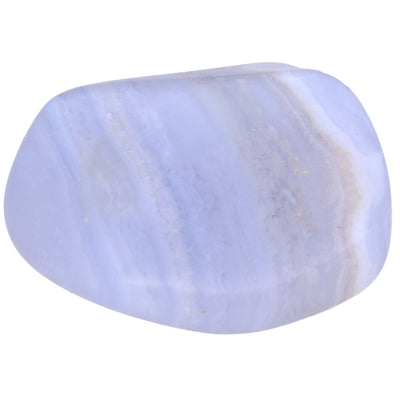
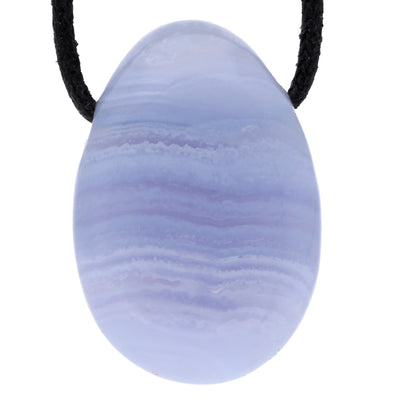
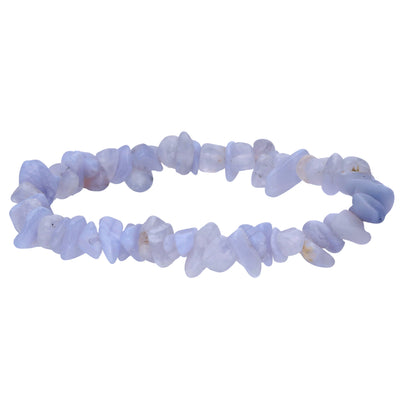
Chalcedony, blue bei Lebensquelle Plus
Echte Naturqualität — versandfertig aus Waldbröl, geprüfter Fachhandel.

Cleaning and charging chalcedony
Clean & charge chalcedony
Blue chalcedony is robust and easy to care for with hardness 6.5–7 — just avoid prolonged sun.
Clean
Rinse under running lukewarm water — chalcedony tolerates water well. Then dry it off.
Alternatively, discharge overnight in a bowl with hematite tumbled stones.
Charge
Charge it in moonlight or on a rock crystal cluster or amethyst druse.
The gentle moonlight matches the mild energy of chalcedony well.
⚠️ Avoid prolonged direct sunlight — the delicate blue can fade over time. Do not use chemicals or an ultrasonic cleaner.
Recognizing authenticity
Blue chalcedony is sometimes confused with dyed agate, glass, or strongly blue-colored material. These features help:
- Delicate natural color: genuine blue chalcedony is mild, light, and slightly milky — often with a subtle gray tint. Very intense, bright blue suggests dyeing.
- Velvety sheen: due to its fine fibrous structure, chalcedony appears velvety matte to silky, not glassy-transparent.
- No stripes: pure blue chalcedony is single-colored; distinct bands or stripes point more toward (dyed) agate.
- Hardness: chalcedony scratches glass with 6.5–7. A “stone” that is easily scratched is glass.
- Feel: genuine chalcedony feels cool and stony; glass imitations often feel warmer and sometimes show air bubbles.
Genuine blue chalcedony shows a delicate, slightly milky light blue with a velvety sheen. At Lebensquelle Plus, we pay attention to genuine natural quality.
Combining chalcedony with other stones
- Chalcedony + rock crystal — rock crystal clarifies and amplifies chalcedony’s calming, balancing effect.
- Chalcedony + aquamarine — the gentle communication duo — both for clear, calm speech.
- Chalcedony + rose quartz — calm & warmth of heart — gentle for composure and loving words.
- Chalcedony + amethyst — double calm — chalcedony soothes, amethyst calms the mind.
- Chalcedony + lapis lazuli — throat power — gentle calm meets clear truth and expression.
Frequently asked questions about the effects of chalcedony
01 What does chalcedony do? +
Blue chalcedony is considered in crystal healing to be a stone of calm, balance, and gentle communication. It is said to soothe inner restlessness, support clear and composed speech, and promote emotional balance. As a throat chakra stone, it is the classic “speaker’s stone.”
02 Why is chalcedony called the “speaker’s stone”? +
Roman speakers are said to have worn chalcedony to strengthen their voice and speak calmly. As a throat chakra stone, it is still said today to promote calm, clear speech and good listening — hence the nickname “speaker’s stone.”
03 Is chalcedony related to agate? +
Yes. Chalcedony is microcrystalline quartz and at the same time the umbrella term for an entire family — agate, carnelian, onyx, and jasper belong to it as well. In trade, “chalcedony” usually means the plain, single-colored light blue variety, while agate is banded.
04 Can chalcedony go in water? +
Yes — blue chalcedony is robust with hardness 6.5–7 and can be cleaned under running water. It is also suitable for gemstone water. Important: avoid prolonged direct sunlight, as the delicate blue can fade, and do not use chemicals.
05 How do I care for chalcedony properly? +
Clean: rinse under running lukewarm water. Charge: in moonlight or on a rock crystal cluster or amethyst druse. Avoid: prolonged direct sunlight (color may fade), chemicals, and ultrasonic cleaning. Complete guide: Clean and charge gemstones.
06 Is intensely blue chalcedony genuine? +
Genuine blue chalcedony is naturally delicate and light, often slightly milky with a gray tint. Very intense or bright blue pieces are often dyed. At Lebensquelle Plus, we pay attention to genuine natural quality in natural, mild blue.
07 Which zodiac sign is chalcedony for? +
Blue chalcedony is mainly assigned to Cancer, the sensitive water sign. As a secondary stone, it suits Sagittarius and Gemini. As a stone of calm, however, it suits anyone seeking more composure and gentle expressiveness.
08 Which stones go well with chalcedony? +
Classic combinations: chalcedony + rock crystal (amplification), chalcedony + aquamarine (communication), chalcedony + rose quartz (calm & heart), chalcedony + amethyst (double calm), chalcedony + lapis lazuli (throat power).
Conclusion
Blue chalcedony — the gentle stone of calm. In crystal healing, the classic “speaker’s stone” for composure, balance, and clear, friendly communication. Anyone seeking more inner calm or wanting to speak more calmly will find chalcedony a mild, soothing companion.
In our chalcedony range ↗ you’ll find tumbled stones, pendants, and jewelry made from genuine natural quality — ready to ship from Waldbröl or directly on site in our store in Nümbrecht.
Important note: The effects described here come from traditional crystal healing and are not scientifically proven. They do not replace medical diagnosis or treatment. If you have health concerns, please consult a doctor.
Further gemstone guides
- Rock crystal effect — meaning, use & cleansing
- Amethyst effect — meaning, use & cleansing
- Clean and charge gemstones — the easy way
- Aquamarine effect — clarity & communication
- Lapis lazuli effect — truth & wisdom
- View all chalcedony products
