



Hawk's Eye is the cool brother of Tiger's Eye: a blue-gray to dark blue quartz variety across which a silky band of light moves when turned — like the watchful gaze of a bird of prey. It is said to promote inner calm, attention, and a clear view of difficult situations. Many of our customers therefore reach for it when focused weeks lie ahead — as a pocket stone in the pocket, as a bracelet, or as a pendant. Here you can learn how to recognize genuine Hawk's Eye, how to use it in everyday life, and how to preserve its steel-blue color for a long time.
Hawk's Eye — quick facts at a glance
| Mineral class | Oxides — quartz group |
| Color | Blue-gray, steel blue to dark blue, often with a silvery sheen |
| Hardness (Mohs) | 6.5–7 |
| Crystal system | Trigonal |
| Chakra | Third eye chakra, additionally throat chakra |
| Zodiac sign | Aquarius, additionally Capricorn |
| Element | Air |
| Special feature | Silky cat's-eye effect due to parallel fibrous structures |
| Suitable for gemstone water | Yes, if natural and undamaged |
| Sunlight | Only briefly and carefully — prolonged sunlight can lighten the color |
| Main sources | South Africa and Namibia, as well as Australia |
What is Hawk's Eye? Mineralogy and origin
Hawk's Eye is quartz (SiO₂) with included, parallel-aligned blue mineral fibers and belongs to the mineral class of oxides. With a Mohs hardness of 6.5–7, it is hard enough for everyday use.
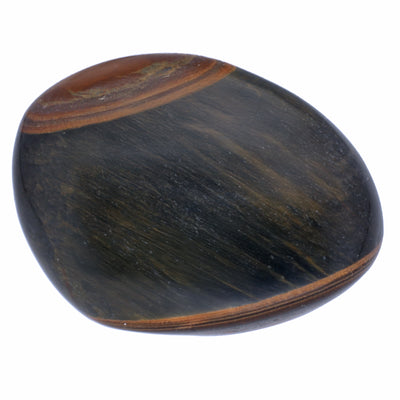
The play of color ranges from steel blue to blue-gray to almost black. The fine, parallel fibers refract the light so that a moving shimmer appears when the stone is moved — the so-called chatoyance. If the iron-bearing fibers oxidize more strongly, the stone turns golden brown: Hawk's Eye becomes Tiger's Eye.
Thanks to its hardness, polished stones and cabochons are suitable for everyday use. Still, it is better to avoid acids and prolonged exposure to sunlight. The main deposits are in South Africa and Namibia, with smaller occurrences in Australia.
Meaning & history
The name refers to the narrow, moving band of light and the cool blue-gray coloration — both are reminiscent of a hawk's eye. In English, the stone is called Hawk's Eye; in German, it is also known as Habichtsauge.
Larger quantities only reached Europe from South Africa in the late 19th century. At first, Hawk's Eye and Tiger's Eye were rare there and therefore highly sought after — today they are popular stones for jewelry and pocket stones.
In modern crystal healing, Hawk's Eye is considered a stone of observation, composure, and mental clarity. It is especially valued by people who want to stay calm in hectic moments and make decisions with a little distance.
Purported effect of Hawk's Eye on the psyche
In our shop, Hawk's Eye is chosen above all for calm concentration and a factual outlook — in crystal healing, the following effects are attributed to it:
- Clear focus: Hawk's Eye is said to help direct attention to what matters most.
- Calm & distance: The stone is said to help respond with composure and inner distance in emotionally charged situations.
- Alert gaze: It is said to sharpen powers of observation and make it easier to recognize connections.
- Confident decisions: Hawk's Eye is said to encourage weighing options soberly and standing by your own decision.
- Mental order: The stone is said to sort thoughts and provide orientation when tasks are confusing.
- Calm boundaries: It is said to accompany a calm, clear boundary-setting against external influences.
Hawk's Eye suits people in phases of life full of decisions — and anyone seeking focus, overview, and calm boundaries.
Purported effect of Hawk's Eye on the body
In traditional crystal healing, Hawk's Eye is attributed the following physical effects — these statements come from traditional descriptions and are not a substitute for medical diagnosis or treatment.
- Rest periods: Traditionally, Hawk's Eye accompanies consciously designed breaks in everyday life.
- Relaxation: In crystal healing, its cool aura is said to support a more relaxed bodily feeling.
- Evening routine: Its use as a pocket stone to help wind down the day in peace is traditionally passed down.
- Well-being: In folk healing, Hawk's Eye is considered a symbolic companion for balance and general well-being.
- Tension: Traditionally, holding and looking at the stone is said to help pause consciously during inner tension.
- Body awareness: In meditation, Hawk's Eye is used to mindfully direct attention to the breath and bodily sensations.
Natural, undamaged Hawk's Eye is suitable for gemstone water. Use only thoroughly cleaned stones of safe origin and ensure hygienic preparation. You can find suitable qualities in our Hawk's Eye range.

Hawk's Eye and the chakras
Hawk's Eye is primarily assigned to the third eye chakra — in chakra teaching, the center for perception, imagination, and mental clarity.
To begin, place a cleaned tumbled stone on your forehead during a quiet meditation or hold it in your hand. Five to ten minutes are enough.
In addition, Hawk's Eye is associated with the throat chakra. There it is said to accompany thoughtful, factual expression — helpful when you want to put your own thoughts into words in peace.
Hawk's Eye & the 7 main chakras
Its steel-blue color connects Hawk's Eye primarily with the third eye chakra and its symbolism of foresight and clarity.
Hawk's Eye and the zodiac signs
As a main stone, Hawk's Eye is assigned to Aquarius. The purported connection to foresight, independence, and factual thinking reflects the traditional symbolism of this air sign.
In addition, the stone appeals to Capricorn, which is attributed clarity, composure, and perseverance. But Hawk's Eye suits anyone who wants to bring more overview and calm focus into everyday life.
Using Hawk's Eye in everyday life
1. As a bracelet — in everyday life
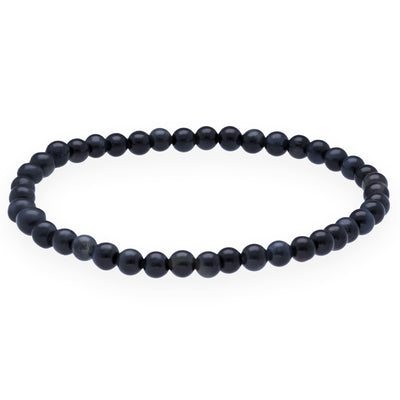
On your wrist, you always have Hawk's Eye in view — a small reminder to pause briefly before deciding.
2. As a pocket stone — for quiet moments
Hold a tumbled stone in your hand during tricky tasks or short breaks. The smooth, cool surface invites small mindfulness rituals.
3. At work — for overview
Place Hawk's Eye next to your screen or notebook. There it serves as a quiet symbol of concentration and a factual outlook.
4. During meditation — at the third eye chakra
Place the stone briefly on your forehead or hold it within sight. Follow the moving band of light with your eyes and let your breath become calm.
5. As a pendant — close to you
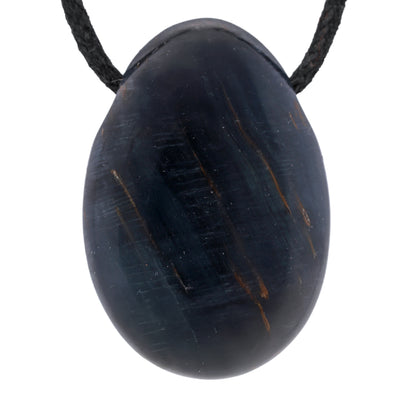
A cabochon pendant is easy to wear and shows the chatoyance especially beautifully. Protect it from acids and prolonged, intense sunlight.
Hawk Eye bei Lebensquelle Plus
Echte Naturqualität — versandfertig aus Waldbröl, geprüfter Fachhandel.

Cleaning and charging Hawk's Eye
Clean & charge Hawk's Eye
Hawk's Eye is robust and easy to care for as a tumbled stone or cabochon — it just does not tolerate acids or long sunbaths.
Discharge
Rinse Hawk's Eye briefly under running water and then dry it with a soft cloth.
Alternatively, place the stone on hematite tumbled stones.
Charge
Charge Hawk's Eye overnight in moonlight or for a few hours on a quartz cluster.
Alternatively, hematite or very brief, gentle sunlight are suitable.
⚠️ With a Mohs hardness of 6.5–7, Hawk's Eye is robust. Keep it away from acids and do not expose it to strong sunlight for long — otherwise its color may lighten slightly.
Recognizing authenticity
Genuine Hawk's Eye reveals itself in moving light — and in a close look at color and structure.
- Color: Natural Hawk's Eye shows cool blue, gray, and anthracite tones rather than a uniformly strong blue.
- Light band: When turned, a narrow, silky shimmer moves across the surface.
- Fiber structure: Under a magnifying glass, you can see fine, largely parallel fibers and small natural irregularities.
- Surface: Polished pieces shine glassy to silky, but remain multi-layered in color — never plastic-like.
- Distinction: Golden-brown areas show a transition to Tiger's Eye; a completely uniform blue may indicate treatment.
If a stone appears brightly colored or lacks the light band, it is worth having it checked by an expert. At Lebensquelle Plus, you get selected natural quality with a clear stone designation.
Combining Hawk's Eye with other stones
- Hawk's Eye + Tiger's Eye — The unequal sibling pair is said to promote overview, groundedness, and decisive action.
- Hawk's Eye + Hematite — This combination is said to unite calm focus with a stable, grounded basic feeling.
- Hawk's Eye + Clear Quartz — Clear Quartz is considered a clarifying companion that is said to strengthen the overview symbolism of Hawk's Eye.
- Hawk's Eye + Smoky Quartz — Both are said to support composure and a factual attitude in turbulent phases.
- Hawk's Eye + Sodalite — The blue duo is said to accompany clear thinking, thoughtful communication, and structured work.
Frequently asked questions about the effect of Hawk's Eye
01 What does Hawk's Eye do? +
Hawk's Eye is said to promote attention, foresight, and inner calm. In crystal healing, it is considered a companion for factual decisions and calm boundary-setting. These associations are traditional and not medically proven.
02 Can Hawk's Eye go in water? +
Yes. Natural, undamaged Hawk's Eye may be cleaned under running water and is also suitable for gemstone water — provided the stone is thoroughly cleaned, untreated, and safely identified. Avoid acids.
03 How do I care for Hawk's Eye properly? +
Rinse Hawk's Eye briefly under running water and dry it with a soft cloth. Moonlight, a cluster, or hematite are suitable for charging; use sunlight only briefly and carefully. You can find more tips under Clean and charge gemstones.
04 Which zodiac sign is Hawk's Eye for? +
Hawk's Eye is mainly assigned to Aquarius, and additionally to Capricorn. What matters most, however, is whether its color, symbolism, and aura appeal to you personally.
05 Which stones go well with Hawk's Eye? +
Hawk's Eye combines well with Tiger's Eye, Hematite, Clear Quartz, Smoky Quartz, and Sodalite. Choose according to whether you want to symbolically accompany grounding, clarity, or calm communication.
06 What is the difference between Hawk's Eye and Tiger's Eye? +
Hawk's Eye shows cool blue-gray tones, while Tiger's Eye is golden brown to brown. Both are fibrous quartz varieties with chatoyance. Through oxidation, Hawk's Eye can turn into Tiger's Eye — which is why you sometimes find both colors in one stone.
07 Which chakra is Hawk's Eye assigned to? +
Hawk's Eye is primarily assigned to the third eye chakra. There it is said to symbolically accompany clarity, perception, and mental overview. In addition, it is associated with the throat chakra.
08 Can Hawk's Eye go in the sun? +
Briefly and in mild light, yes. You should avoid prolonged or intense sunlight because the color may lighten slightly. It is gentler to charge it in moonlight or on a cluster.
Conclusion
With its steel-blue band of light, Hawk's Eye is a striking quartz and is considered the stone of foresight. It is said to bring clarity, calm focus, and thoughtful boundaries — robust, easy to care for, and a faithful everyday companion.
Discover our Hawk's Eye range ↗ with hand-picked natural stones — ready to ship from Waldbröl or directly on site in our store in Nümbrecht.
Important note: The effects described here come from traditional crystal healing and are not scientifically proven. They do not replace medical diagnosis or treatment. If you have health concerns, please consult a doctor.
Further gemstone guides
- Clear Quartz effect — meaning, use & cleansing
- Amethyst effect — meaning, use & cleansing
- Clean and charge gemstones — the easy way
- Tiger's Eye effect: meaning, use & cleansing
- Hematite effect: meaning, use & cleansing
- View all Hawk's Eye products
