



Peridot shines in fresh olive to yellow-green — a gemstone that was already revered in ancient Egypt as the “gemstone of the sun.” In crystal healing, it is considered the stone of new beginnings, abundance, and opening the heart — a bright, liberating heart stone. In this guide, you’ll find everything about the attributed effects of Peridot, its meaning, uses, and proper care — compiled by a specialist retailer.
Peridot — quick facts at a glance
| Mineral class | Silicate — olivine group (magnesium iron silicate) |
| Color | olive to yellow-green, bottle green |
| Hardness (Mohs) | 6.5 to 7 |
| Crystal system | orthorhombic (rhombic) |
| Chakra | Heart chakra (Anahata) |
| Zodiac sign | Leo (main), Virgo, Libra |
| Element | Light |
| Special feature | Birthstone for August; also called Chrysolite or Olivine |
| Suitable for gemstone water | Limited — only briefly, as it is delicate (better as jewelry) |
| Sunlight | Tolerates sun (color does not fade) |
| Main sources | Pakistan, Myanmar, Egypt (Zabargad), USA (Arizona), China |
What is Peridot? Mineralogy and origin
Peridot is the gemstone variety of the mineral olivine — a magnesium iron silicate with a Mohs hardness of 6.5 to 7. Its characteristic olive to yellow-green color comes from its iron content; depending on the stone, the color ranges from light lime green to rich bottle green — usually with a warm golden tint.
Peridot is one of the few gemstones that occurs in only one color: always green. In the past, it was also traded as “chrysolite” (Greek for “gold stone”) — this always refers to the same green gemstone variety of olivine.
Its origin is fascinating: some Peridot comes from the upper mantle of the Earth and reaches the surface through volcanism — some olivine crystals have even been found in meteorites (pallasites). Important sources include Pakistan, Myanmar, the island of Zabargad (Egypt), Arizona (USA), and China. As a silicate, Peridot is relatively hard, but brittle and only imperfectly cleavable — it is sensitive to hard impacts, acids, and thermal shock.
Meaning & history
More than 3,500 years ago, the Egyptians mined Peridot on the Red Sea island of Zabargad. They called it the “gemstone of the sun” and believed it protected against nighttime fears.
In the Middle Ages, Peridots adorned churches and reliquaries — some of the supposed “emeralds” in old church treasures later turned out to be Peridot. Crusaders brought it to Europe.
In modern crystal healing, Peridot is considered the stone of new beginnings, abundance, and opening the heart — a bright, liberating stone said to help release the old and look ahead with a light heart.
Attributed effect of Peridot on the psyche
When someone asks us for a stone for a fresh start, more lightness, or to let go of resentment, Peridot is a lovely recommendation. In crystal healing, it is said to have the following effects:
- New beginnings & letting go: The classic — Peridot is said to help release old burdens, resentment, and feelings of guilt, allowing a fresh start.
- Abundance & prosperity: Its rich green color has traditionally been associated with growth, abundance, and spiritual as well as material wealth.
- Opening the heart & lightness: Said to open the heart, create a light, cheerful sense of life, and soften envy and jealousy.
- Self-confidence & independence: Associated with the courage to hold one’s own opinion and a healthy sense of self-worth.
- Clarity & liberation: Considered a cleansing stone that is said to help free oneself from burdensome patterns.
- Optimism & confidence: Said to brighten gloomy moods and encourage a fresh, hopeful outlook.
Peridot is therefore especially suited to phases of new beginnings, letting go, and inner growth — and to people who want to leave old baggage behind and start anew with a light heart.
Attributed effect of Peridot on the body
In traditional crystal healing, the following physical effects are attributed to Peridot — these statements come from traditional descriptions and are not a substitute for medical diagnosis or treatment.
- Liver & gallbladder: In folk healing, traditionally associated with the liver-gallbladder area and detoxification.
- Metabolism & detoxification: Described as an invigorating, cleansing stone for the metabolism.
- Digestion: In tradition, associated with the digestive tract and described as harmonizing.
- Skin: In old descriptions, linked to a pure, clear complexion.
- Regeneration: In crystal healing, associated with renewal and new strength.
- Well-being: Considered a bright, energizing companion for a light bodily feeling.
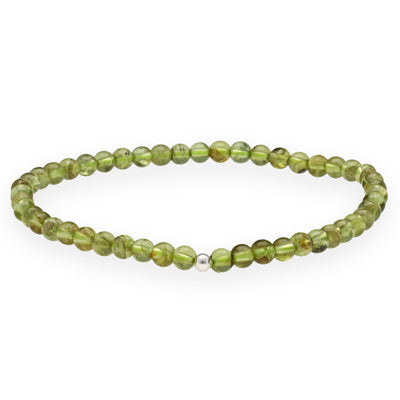
With a hardness of 6.5–7, Peridot is relatively hard, but brittle and impact-sensitive — so it is only conditionally suitable for gemstone water. Its effect is best appreciated as a tumbled stone, pendant, or piece of jewelry. You can find polished Peridots in our Peridot range.

Peridot and the chakras
In chakra teachings, Peridot is primarily assigned to the heart chakra (Anahata) — the energy center for love, compassion, and joy for life. Its fresh green color fits this chakra perfectly.
As a heart stone, Peridot is said to free the heart from resentment, envy, and old wounds and create space for lightness, abundance, and a loving new beginning. Because of its invigorating, sunny energy, it is sometimes also associated with the solar plexus chakra (Manipura), the center of self-worth and personal power.
In practice, Peridot is placed on the heart or worn as a pendant at heart level — to open the heart and encourage a light, free sense of life.
Peridot & the 7 main chakras
Peridot is a bright heart stone — it is said to open the heart, release the old, and create space for abundance and lightness.
Peridot and the zodiac signs
Astrologically, Peridot is considered the main stone for Leo — and at the same time the birthstone for August. It is said to enhance Leo’s warmth, generosity, and radiance.
As a secondary stone, it also suits Virgo (clarity, letting go) and Libra (harmony, balance). As a stone of new beginnings, Peridot suits anyone who wants to let go of baggage and start anew with a light heart.
Using Peridot in everyday life
1. As a pendant at heart level — for letting go
Wearing a Peridot pendant at heart level is said to open the heart and help release resentment and old wounds.
2. During a new beginning — as a source of courage
Carry Peridot with you when a new phase of life is approaching — it is said to bring confidence and lightness.
3. In the “abundance corner” — for prosperity
As a green prosperity stone, Peridot is often placed where abundance and growth are meant to enter.
4. In meditation — for the heart
Place Peridot on the heart. It is said to expand the heart, soften envy and jealousy, and create a light sense of life.
5. As jewelry in everyday life
Peridot jewelry is said to bring optimism and good cheer into the day as a bright companion.
Peridot bei Lebensquelle Plus
Echte Naturqualität — versandfertig aus Waldbröl, geprüfter Fachhandel.

![[slot:MAIN] PT05 polished](http://lebensquelle-plus.de/cdn/shop/files/dropupload_c9b1939e54_9c0be698-d20d-4576-8b24-2a40b75a0342.jpg?v=1782464946&width=400)
Clean and recharge Peridot
Clean & recharge Peridot
Peridot is relatively hard with a hardness of 6.5–7, but brittle — so handle it with a little care.
Clean
Rinse briefly under lukewarm, running water and dry it. No acids, no ultrasound, no extreme temperature changes.
Alternatively, gently wipe with a soft, slightly damp cloth.
Recharge
Recharge on a clear quartz cluster or amethyst geode. Sunlight is harmless — the color does not fade.
A clear quartz cluster keeps Peridot fresh permanently.
⚠️ Peridot is brittle and impact-sensitive — protect it from hard knocks. No acids, no ultrasonic cleaner, and no extreme temperature fluctuations.
Recognizing authenticity
Peridot is often confused with green glass, tourmaline, or other green materials. These features help:
- Typical color: genuine Peridot is always olive to yellow-green with a slight golden tint — never emerald blue-green. A color that is too cool or bluish is more likely to be glass or another stone.
- Birefringence: Peridot strongly doubles light — through a magnifying glass, edges and inclusions often appear “doubled.” Glass does not show this.
- Hardness: With a hardness of 6.5–7, Peridot scratches glass. If the “stone” itself can be scratched easily, it is glass.
- Inclusions: natural Peridot often shows typical “lily pad” inclusions; glass is usually flawless or has round air bubbles.
- Feel: genuine Peridot feels cool and stony; glass imitations often warm up faster.
Genuine Peridot shows a warm olive-yellow-green color, clear birefringence, and is hard. At Lebensquelle Plus, we focus on genuine natural quality.
Combining Peridot with other stones
- Peridot + clear quartz — clear quartz clarifies and amplifies Peridot’s liberating, heart-opening effect.
- Peridot + rose quartz — gentle heart energy — letting go meets self-love and security.
- Peridot + citrine — the green-gold abundance duo — for prosperity, optimism, and new beginnings.
- Peridot + aventurine — double heart and luck power — green for growth and confidence.
- Peridot + amethyst — letting go & calm — Peridot frees the heart, amethyst soothes the mind.
Frequently asked questions about the effects of Peridot
01 What does Peridot do? +
In crystal healing, Peridot is considered a stone of new beginnings, abundance, and opening the heart. It is said to help release resentment, envy, and old wounds, open the heart, and promote lightness, optimism, and prosperity. As a heart stone, it is said to create space for a loving new beginning.
02 Is Peridot the same as olivine or chrysolite? +
Yes. Peridot is the gemstone quality of the mineral olivine. In the past, it was also traded as “chrysolite” (Greek for “gold stone”). All three terms refer to the same olive to yellow-green stone — “Peridot” is the term commonly used in jewelry.
03 What color is Peridot? +
Peridot is always green — from light lime green to olive green and rich bottle green, usually with a warm golden tint. The color comes from iron and is part of the stone itself, so it is not dyed. A bluish or emerald-green “Peridot” is usually another stone or glass.
04 Can Peridot go in water? +
Briefly, yes: Peridot can be rinsed briefly under lukewarm, running water for cleaning. However, because it is brittle and impact-sensitive, it is only conditionally suitable for longer gemstone water use — it is nicer worn as jewelry. No acids, no ultrasound, and no extreme temperature changes.
05 How do I care for Peridot properly? +
Clean: briefly under lukewarm, running water. Recharge: on a clear quartz cluster or amethyst geode; sunlight is harmless because the color does not fade. Avoid: hard knocks, acids, ultrasound, and extreme temperature fluctuations. Complete guide: Clean and recharge gemstones.
06 Which zodiac sign is Peridot for? +
Peridot is primarily associated with Leo and is also the birthstone for August. As a secondary stone, it also suits Virgo and Libra. As a stone of new beginnings, however, it suits anyone who wants to let go of baggage and start anew.
07 How do I recognize genuine Peridot? +
Genuine Peridot is always olive to yellow-green with a golden tint, shows clear birefringence through a magnifying glass (doubled edges), and often “lily pad” inclusions. It scratches glass with a hardness of 6.5–7. A bluish, flawless, or easily scratched “Peridot” is usually glass.
08 Which stones go well with Peridot? +
Classic combinations: Peridot + clear quartz (amplification), Peridot + rose quartz (heart energy), Peridot + citrine (abundance), Peridot + aventurine (luck & growth), Peridot + amethyst (letting go & calm).
Conclusion
Peridot — the green light of new beginnings. In crystal healing, it is the classic stone for letting go, abundance, and a light heart. Anyone who wants to leave old baggage behind and start anew with confidence will find a bright, liberating companion in Peridot.
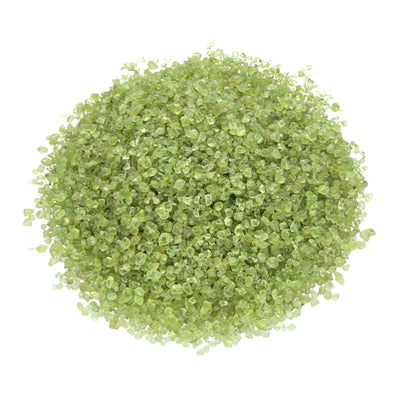
In our Peridot range ↗, you’ll find tumbled stones, pendants, and jewelry made from genuine natural quality — ready to ship from Waldbröl or available directly in our store in Nümbrecht.
Important note: The effects described here come from traditional crystal healing and are not scientifically proven. They do not replace medical diagnosis or treatment. If you have health concerns, please consult a doctor.
Further gemstone guides
- Clear Quartz effect — meaning, use & cleansing
- Amethyst effect — meaning, use & cleansing
- Clean and recharge gemstones — the easy way
- Aventurine effect — the green luck stone
- Citrine effect — sun & abundance
- View all Peridot products
