



Lepidolite shimmers in delicate lilac to lavender and consists of fine, pearly mica layers. Its special feature: it contains the element lithium — and in crystal healing it is considered one of the most important stones for calm, serenity, and emotional balance. In this guide, you’ll find everything about the supposed effects of Lepidolite, its meaning, uses, the correct (water-free!) care, and an authenticity check.
Lepidolite — quick profile at a glance
| Mineral class | Silicate — mica group (lithium-bearing mica) |
| Color | lilac, lavender, pink-violet, rarely gray |
| Hardness (Mohs) | 2.5 to 3 — very soft, flakes easily |
| Crystal system | monoclinic, flaky-layered structure |
| Chakra | Heart chakra & Crown chakra |
| Zodiac signs | Libra, Pisces, Virgo |
| Element | Water |
| Special feature | contains lithium — associated with calming |
| Suitable for gemstone water | Not suitable — soft & sensitive to water |
| Sunlight | Tolerates brief light — avoid prolonged sun |
| Main locations | Brazil, Madagascar, USA, Czech Republic |
What is Lepidolite? Mineralogy and origin
Lepidolite belongs to the mica group — a family of minerals with a characteristic flaky-layered structure. Its delicate lilac to lavender color is due to a content of manganese and lithium. In fact, Lepidolite is an important natural source of lithium and is sometimes even mined for that purpose.
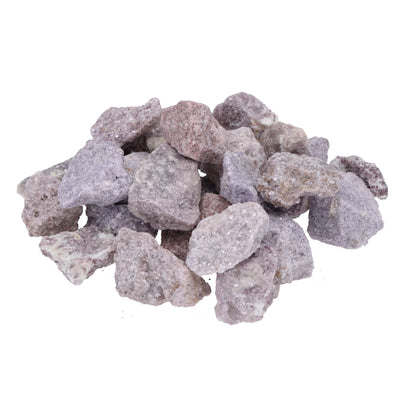
With a Mohs hardness of only 2.5 to 3, Lepidolite is very soft and flakes easily — it consists of many thin, pearly shimmering layers that can be separated. Lepidolite is more stable when it occurs intergrown with quartz or as a compact mass.
Lepidolite often grows together with pink tourmaline (rubellite) — such pieces with pink tourmaline needles in purple mica are especially sought after. Main sources are Brazil, Madagascar, and the USA.
Meaning & history
Lepidolite was described mineralogically relatively late, in the 18th century — its name comes from the Greek lepis (scale), because of the scaly mica structure. For a long time, it was mainly of industrial interest as a lithium ore.
In modern crystal healing, Lepidolite has gained a special reputation — especially because it contains lithium, an element that also plays a calming role in medicine. In esotericism, it is therefore considered one of the most important stones for calm, serenity, and emotional stability.
Important: This connection is a symbolic, traditional attribution — the lithium content in the stone does not work like a medication. Lepidolite is a popular companion during stressful, restless phases of life, but not a substitute for medical or therapeutic help.
Supposed effect of Lepidolite on the psyche
When someone asks us for a stone against inner restlessness, for better sleep, or simply for more serenity, Lepidolite is one of the first recommendations. In crystal healing, it is said to have the following effects:
- Calm & serenity: The classic — Lepidolite is said to gently ease inner restlessness, nervousness, and tension.
- Emotional stability: Associated with balanced feelings and more emotional equilibrium during turbulent phases.
- Letting go of worries: Said to help release circling thoughts and rumination and come to rest.
- Restful sleep: A classic sleep stone — said to promote easier falling asleep and relaxed nights.
- Stress reduction: Traditionally used as an “anchor” during hectic, overwhelming times.
- Mastering transitions: Considered a stone for life transitions and changes — said to provide stability amid change.
Lepidolite is therefore especially suitable for phases in which calm, serenity, emotional stability, or better sleep are the focus. Note: For persistent restlessness, sleep disorders, or emotional distress, Lepidolite is not a substitute for medical or therapeutic help.
Supposed effect of Lepidolite on the body
In traditional crystal healing, the following physical effects are attributed to Lepidolite — these statements come from traditional descriptions and are not a substitute for medical diagnosis or treatment.
- Nervous system: Traditionally associated with a calming effect on the nervous system.
- Sleep: Classified as a classic sleep stone for calm, restorative sleep.
- Tension: Traditionally used when placed on the body to help release muscular tension.
- Inner restlessness: Associated with calming palpitations and nervousness.
- Exhaustion: Said to support during overwhelm and nervous exhaustion.
- General relaxation: Considered a gentle, balancing companion in stressful everyday life.
Lepidolite is not suitable for gemstone water — it is very soft, flakes, and must not go into water. It is better to wear it as a tumbled stone or pendant or place it next to the bed at night.

Lepidolite and the chakras
In chakra teachings, Lepidolite is primarily assigned to the Heart Chakra (Anahata) and the Crown Chakra (Sahasrara) — it is said to calm the heart while also clarifying the mind and connecting it with a higher sense of peace.
In practice, Lepidolite is placed on the chest or the crown of the head during meditation or simply held in the hand. There, it is said to convey deep calm, serenity, and a feeling that “everything is fine.”
Because of its balancing quality, Lepidolite is often also assigned to the Third Eye Chakra — as a stone of a calm, clear mind.
Lepidolite & the 7 main chakras
Lepidolite connects the heart and crown chakras — it is said to calm the heart and connect the mind with a deep, serene peace.
Lepidolite and the zodiac signs
Astrologically, Lepidolite is primarily assigned to Libra (balance, harmony) and Pisces (sensitivity, emotion). It is said to help these signs find inner calm and not be overwhelmed by feelings.
Secondary stone, it is for Virgo (against rumination and worries). As a major stone of calm and serenity, Lepidolite suits anyone seeking a gentle anchor during stressful, restless phases.
Using Lepidolite in everyday life
1. Beside the bed — for restful sleep
A Lepidolite on the nightstand or under the pillow is the classic use. It is said to promote easier falling asleep and relaxed nights.
2. In the hand — during tension
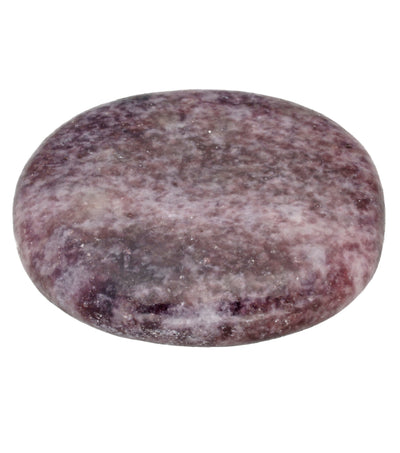
Hold a Lepidolite tumbled stone in your hand during stressful moments or keep it in your pocket — it is said to calm immediately.
3. In meditation — for deep calm
Placed on the chest or crown of the head, Lepidolite is said to release inner restlessness and give a feeling of serenity.
4. At the workplace — against stress
A Lepidolite on the desk as a calm anchor during hectic phases.
5. During transitional phases — as a companion
Worn consciously during times of major change to promote stability and serenity amid change.
Lepidolite bei Lebensquelle Plus
Echte Naturqualität — versandfertig aus Waldbröl, geprüfter Fachhandel.
![[slot:MAIN] MAIN polished](http://lebensquelle-plus.de/cdn/shop/files/SQUARE_new_317aa813-4379-4d2c-af16-63e20110f041.jpg?v=1782975803&width=400)
Cleaning and charging Lepidolite
Clean & charge Lepidolite
Lepidolite is very soft, flakes easily, and must not go into water — it needs dry care.
Cleaning
Wipe only with a dry or slightly damp cloth. DO NOT place in water! No ultrasound, no acids. Gentle smudging is possible.
Gentle alternative: briefly hold over incense (sage) — dry and gentle.
Charging
Charge in moonlight or on an amethyst cluster — both dry and gentle.
Alternative: one night on a clear quartz cluster.
⚠️ DO NOT put in water! Very soft (hardness 2.5–3) and flakes easily. No water bath, no ultrasound, no acids. Protect carefully from impacts. Not suitable for gemstone water.
Recognizing authenticity
Lepidolite is relatively distinctive, but is occasionally confused with other purple stones. These features help:
- Mica shimmer: genuine Lepidolite shows a typical pearly, flaky shimmer and consists of fine layers — no other purple stone has this.
- Softness: with a hardness of 2.5–3, Lepidolite is very soft and flakes easily; a hard, glassy purple stone is more likely amethyst or fluorite.
- Color: typical is a delicate, somewhat “powdery” lilac to lavender, often with lighter and darker zones.
- Tourmaline inclusions: pink tourmaline needles (rubellite) in purple mica are a good sign of authenticity.
- Distinguishing from amethyst: Amethyst is hard, glassy, and translucent — Lepidolite is soft, shimmering-flaky, and opaque.
Genuine Lepidolite is soft, flaky-shimmering, and delicate lilac. At Lebensquelle Plus, Lepidolite comes from verified natural quality — no dyed imitations.
Combining Lepidolite with other stones
- Lepidolite + Amethyst — double calm — both are considered soothing, good for sleep and meditation.
- Lepidolite + Rose Quartz — serenity meets self-love — a gentle, heartfelt combination.
- Lepidolite + Clear Quartz — Clear Quartz amplifies the calming effect of Lepidolite.
- Lepidolite + Moonstone — calm & intuition — a gentle combination for sensitive phases.
- Lepidolite + Black Tourmaline — calming plus protection & grounding — good for overstimulated, stressed people.
Frequently asked questions about the effects of Lepidolite
01 What does Lepidolite do? +
In crystal healing, Lepidolite is considered one of the most important stones for calm and serenity. It is said to relieve inner restlessness and nervousness, provide emotional stability, help let go of worries, and promote restful sleep. It contains lithium and is symbolically associated with calming.
02 Does Lepidolite help with anxiety or sleep problems? +
In crystal healing, Lepidolite is traditionally used for restlessness, stress, and sleep problems — as a gentle, calming companion. Important: this is a traditional use and not a medication. For persistent anxiety or sleep disorders, the stone does not replace medical or therapeutic help.
03 Can Lepidolite go in water? +
No! Lepidolite is very soft (hardness 2.5–3), flakes easily, and is sensitive to water. It must not be placed in water and is not suitable for gemstone water. To clean it, wipe only with a dry or slightly damp cloth.
04 How do I care for Lepidolite properly? +
Cleaning: only with a dry or slightly damp cloth, never place in water. Charging: in moonlight or on an amethyst cluster. Protect from impacts (flakes easily). Full guide: Clean and charge gemstones.
05 Does Lepidolite really contain lithium? +
Yes — Lepidolite is a lithium-bearing mica and even an important natural source of lithium. In crystal healing, it is therefore symbolically associated with calming. However, the lithium content in the stone does not work like a medication; it is not absorbed when worn.
06 Which zodiac sign is Lepidolite for? +
Lepidolite is primarily assigned to Libra and Pisces, and as a secondary stone it is for Virgo. As a major stone of calm, it suits anyone seeking a gentle anchor during stressful phases.
07 Which stones go well with Lepidolite? +
Classic combinations: Lepidolite + Amethyst (double calm), Lepidolite + Rose Quartz (serenity & self-love), Lepidolite + Clear Quartz (amplification), Lepidolite + Black Tourmaline (calming & protection).
08 Is Lepidolite suitable as a gift? +
Very much so — Lepidolite is a meaningful gift for stressed, busy, or sensitive people to whom you wish calm and serenity. Its delicate lilac and gentle shimmer make it a popular, soothing companion.
Conclusion
Lepidolite — the lilac stone of calm. A lithium-bearing mica with a pearly shimmer, considered in crystal healing one of the most important companions for serenity, emotional stability, and restful sleep. Ideal for stressful, restless phases of life — as a gentle anchor, not a substitute for medical help.
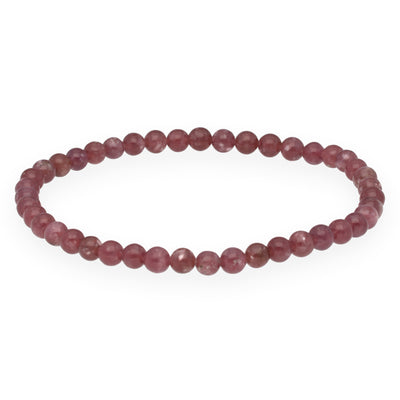
In our Lepidolite range ↗ you’ll find tumbled stones, pendants, and rough pieces in genuine natural quality — ready to ship from Waldbröl or directly on site in our store in Nümbrecht.
Important note: The effects described here come from traditional crystal healing and are not scientifically proven. They do not replace medical diagnosis or treatment. If you have health concerns, please consult a doctor.
Further gemstone guides
- Clear Quartz effect — meaning, use & cleansing
- Amethyst effect — meaning, use & cleansing
- Clean and charge gemstones — the easy way
- Amethyst effect — king of calm
- Rose Quartz effect — the heart stone
- View all Lepidolite products