



Emerald — its deep, radiant green is one of the four classic gemstones alongside diamond, ruby, and sapphire. In crystal healing, it is regarded as a great stone of love, wisdom, and hope, closely connected to the heart chakra. Cleopatra already loved it. In this guide, you’ll find everything about the attributed effects of emerald, its meaning, uses, care, and an authenticity check — compiled by specialists.
Emerald — quick facts at a glance
| Mineral class | Silicate — beryl (like aquamarine, only green) |
| Color | rich green to emerald green (due to chromium & vanadium) |
| Hardness (Mohs) | 7.5 to 8 — hard, but brittle |
| Crystal system | hexagonal, often crystals in host rock |
| Chakra | Heart chakra (Anahata) |
| Zodiac sign | Taurus (main), Cancer, Aries |
| Element | Earth |
| Special feature | Birthstone of May, one of the 4 great gemstones |
| Suitable for gemstone water | Not recommended — inclusions & resin fillings are sensitive |
| Sunlight | Tolerates brief light — avoid prolonged sun exposure |
| Main sources | Colombia, Brazil, Zambia, Zambia, Afghanistan |
What is emerald? Mineralogy and origin
Like aquamarine, emerald belongs to the beryl family — its famous rich green color is created by traces of chromium and vanadium. Only deep, pure green beryls may actually be called “emerald”; lighter green is considered “green beryl.”
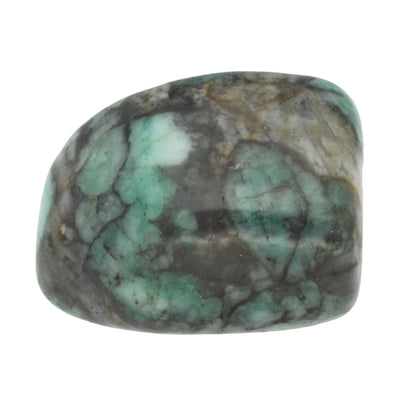
With a Mohs hardness of 7.5 to 8, emerald is hard, but due to numerous natural inclusions it is brittle and sensitive to impact. These inclusions — poetically called “jardin” (garden) by experts — are typical and are considered a sign of authenticity in natural stones, not a flaw.
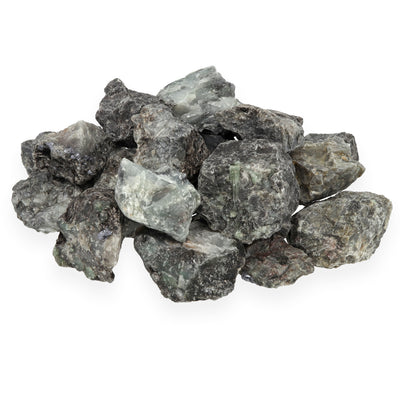
The most beautiful deep-green emeralds traditionally come from Colombia; other important deposits are found in Brazil, Zambia, and Afghanistan. Many emeralds are treated with oil or synthetic resin to make fine cracks and inclusions less visible — this is common in the trade, but should be taken into account when caring for the stone.
Meaning & history
Emerald has been coveted for at least 4,000 years — the oldest known mines were in Egypt and are attributed to the “Cleopatra mines.” The Egyptian queen loved emeralds and adorned herself with them.
In almost all great civilizations, emerald was regarded as a stone of love, wisdom, and immortality. The Inca and Aztecs revered it as sacred; in the Middle Ages it was believed to grant the gift of prophecy and protect love. It was also considered a stone of truth — supposedly it would shatter if a lie was told.
Today, emerald is the birthstone of May and, in crystal healing, the most noble heart chakra stone — for love, heartfelt growth, hope, and deep inner harmony.
Attributed effect of emerald on the psyche
When someone asks us for a noble stone for the heart, for love and wisdom, or for renewed hope, emerald is the royal recommendation. In crystal healing, the following effects are attributed to it:
- Love & heartfelt growth: The classic — emerald is considered a great heart stone that is said to strengthen the ability for deep, mature love.
- Wisdom & clarity: Associated with mental clarity, wisdom, and sound judgment.
- Hope & joy for life: Said to encourage confidence, hope, and new beginnings — the “fresh green” of life.
- Harmony in relationships: Traditionally a stone for loyal, harmonious partnerships.
- Inner balance: Associated with balance, calm, and an open, generous heart.
- Truth & sincerity: Long regarded as a stone of truth and honest feelings.
Emerald is therefore especially suited to phases in which love, heartfelt growth, wisdom, hope, or harmony are central — and to people who want to open their hearts and move through life with greater wisdom.
Attributed effect of emerald on the body
In traditional crystal healing, emerald is attributed the following physical effects — these statements come from traditional descriptions and are not a substitute for medical diagnosis or treatment.
- Heart & circulation: As a heart chakra stone, traditionally assigned to the cardiovascular area.
- Eyes: In old traditions, associated with the eyes and “clear seeing” (the green light was considered soothing).
- Immune system: Associated with a strengthening, regenerative effect.
- Detoxification & liver: As a green stone, traditionally assigned to regeneration and detoxification.
- Nervous system: Said to have a calming and balancing effect on the nerves.
- General regeneration: Considered an invigorating, renewing companion (the “fresh green”).
Emerald is not recommended for gemstone water — many emeralds are treated with oil or resin, which can dissolve in water or acids. Better wear it as a noble pendant or ring close to the heart.

Emerald and the chakras
In chakra teachings, emerald is clearly assigned to the heart chakra (Anahata) — the central energy center that stands for love, compassion, harmony, and relationships. Its rich green is the classic color of this chakra.
In practice, emerald is placed on the chest during meditation or worn as a pendant close to the heart. It is said to open the heart, enable mature love, and promote harmony in relationships.
As the “most noble” heart stone, emerald in crystal healing is especially associated with the connection of love and wisdom — heart and mind in harmony.
Emerald & the 7 main chakras
Emerald is the most noble heart chakra stone — it is said to open the heart to mature love, wisdom, and harmony.
Emerald and the zodiac signs
Astrologically, emerald is the main stone for Taurus — the earthy, sensual Venus sign that values love, beauty, and constancy. It is said to help Taurus open its heart and live loyal, harmonious relationships.
As a secondary stone, it is for Cancer (emotion, security) and Aries (balancing fiery energy). As a great heart and love stone, however, emerald suits anyone who wants to open their heart and love with wisdom.
Using emerald in everyday life
1. As jewelry worn close to the heart
An emerald pendant or ring is the classic use. Worn close to the heart, it is said to promote love, harmony, and heartfelt growth.
2. In meditation — for the heart
Placed on the chest, emerald is said to open the heart chakra and enable mature, wise love.
3. In partnerships — as a symbol
Traditionally a stone for loyal love — a meaningful gift or symbol in relationships.
4. For new beginnings — as a bearer of hope
Consciously worn during times of new beginnings to encourage hope, confidence, and fresh energy.
5. As a stone of wisdom — when learning
Traditionally also used for clarity, wisdom, and sound judgment.
Emerald bei Lebensquelle Plus
Echte Naturqualität — versandfertig aus Waldbröl, geprüfter Fachhandel.
![[slot:MAIN] MAIN polished](http://lebensquelle-plus.de/cdn/shop/files/SQUARE_new_2fb93df0-a1d1-479a-8f30-4708c3c8d017.jpg?v=1787042837&width=400)
Cleaning and charging emerald
Clean & charge emerald
Emerald is hard, but brittle and often treated — it needs careful care.
Clean
Clean only briefly with lukewarm water and a soft cloth. No ultrasound (can crack inclusions), no acids, and no heat (can dissolve oil/resin fillings).
Gentle alternative: brief smoke cleansing instead of bathing.
Charge
Charge in moonlight or on an amethyst cluster — both are gentle for this sensitive gemstone.
Alternative: leave overnight on a clear quartz cluster.
⚠️ No ultrasound, no acids, no heat! Emerald is brittle (inclusions) and usually treated with oil/resin. Protect from impacts. Not recommended for gemstone water.
Recognizing authenticity
Emerald is often synthetically produced or imitated by green glass and other green stones. These features help:
- Inclusions (jardin): natural emeralds almost always show fine inclusions and small cracks — a completely flawless, vivid green “emerald” is usually synthetic or glass.
- Color: real emerald green is deep and slightly bluish-green; very yellowish or overly vivid green suggests imitations or green beryl.
- Hardness: with 7.5–8, emerald scratches glass. If the stone itself can be scratched easily, it is glass.
- Air bubbles: round air bubbles inside indicate glass, not genuine beryl.
- Synthetic: synthetic emeralds are chemically real emeralds, but grown in a lab and significantly cheaper — reputable dealers declare this.
Genuine natural emerald shows fine inclusions, a deep bluish green, and is hard enough to scratch glass. At Lebensquelle Plus, emerald comes from verified natural quality with transparent origin.
Combining emerald with other stones
- Emerald + rose quartz — double heart power — mature love meets gentle self-love.
- Emerald + clear quartz — clear quartz amplifies the opening, clarifying heart effect.
- Emerald + rhodonite — both heart stones — for healing and harmony in relationships.
- Emerald + amethyst — love meets calm & wisdom — a noble meditation combination.
- Emerald + aventurine — two green heart stones — for serenity and an open heart.
Frequently asked questions about the effects of emerald
01 What does emerald do? +
In crystal healing, emerald is considered a great stone of love, wisdom, and hope. It is said to open the heart to mature love (heart chakra), promote mental clarity and wisdom, support hope and new beginnings, and create harmony in relationships.
02 Which zodiac sign is emerald for? +
Emerald is the main stone for Taurus and the birthstone of May. As a secondary stone, it is for Cancer and Aries. As a great heart and love stone, however, it suits anyone who wants to open their heart and love with wisdom.
03 Why is emerald so sensitive even though it is hard? +
Although emerald has a high hardness (7.5–8), it is brittle and sensitive to impact due to numerous natural inclusions and fine cracks. In addition, many emeralds are treated with oil or resin. Therefore: no ultrasound, no acids, no heat, and protect from impacts.
04 How do I care for emerald properly? +
Cleaning: only briefly with lukewarm water and a soft cloth — no ultrasound, no acids, no heat. Charging: in moonlight or on an amethyst cluster. Protect from impacts. Full guide: Cleaning and charging gemstones.
05 How do I recognize a real emerald? +
Real natural emeralds almost always show fine inclusions (jardin), have a deep slightly bluish green, and scratch glass. Completely flawless, vivid green, or very inexpensive stones are often synthetic or glass — round air bubbles indicate glass.
06 Is emerald related to aquamarine? +
Yes — both belong to the beryl family. Emerald is green due to chromium and vanadium, aquamarine is blue due to iron. Mineralogically they are closely related, but very different in color and effect.
07 Which stones go well with emerald? +
Classic combinations: emerald + rose quartz (heart power), emerald + rhodonite (healing in relationships), emerald + clear quartz (amplification), emerald + amethyst (love & wisdom).
08 Is emerald suitable as a gift? +
Very noble — as the birthstone of May and a symbol of love and wisdom, emerald is a particularly meaningful gift, especially for those born in May or for anniversaries. As one of the four great gemstones, it has high ideal and material value.
Conclusion
Emerald — the noble green of love and wisdom. One of the four great gemstones, revered for thousands of years from Cleopatra to the Inca. In crystal healing, the most noble heart stone: for mature love, wisdom, hope, and harmony. Anyone wishing to give the heart a royal companion will find a timeless treasure in emerald.
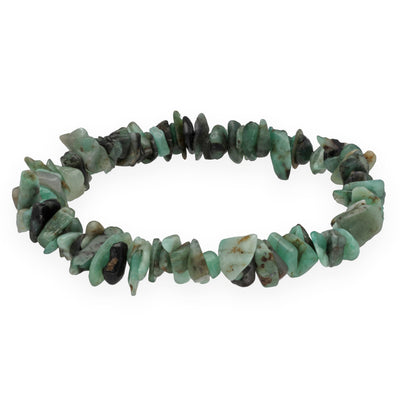
In our emerald range ↗ you’ll find pendants, tumbled stones, and jewelry made from genuine natural quality — ready to ship from Waldbröl or directly on site in our store in Nümbrecht.
Important note: The effects described here come from traditional crystal healing and are not scientifically proven. They do not replace medical diagnosis or treatment. If you have health concerns, please consult a doctor.
Further gemstone guides
- Clear Quartz effect — meaning, use & cleansing
- Amethyst effect — meaning, use & cleansing
- Cleaning and charging gemstones — the easy way
- Rose Quartz effect — the heart stone
- Aquamarine effect — the related beryl
- View all emerald products