



Shungite is one of the most unusual stones in crystal healing — a carbon rock around two billion years old from Russian Karelia, and the only mineral in the world that contains natural fullerenes. In crystal healing, it is regarded as a powerful protection and grounding stone, traditionally associated with purifying water and shielding against “electrosmog.” In this guide, you’ll find everything about the supposed effects of shungite on the mind, body, and chakras, plus its uses, the famous shungite water, care, authenticity checks, and the most frequently asked questions from our store in Nümbrecht.
Shungite — quick facts at a glance
| Mineral class | Carbon mineraloid — fullerenic rock (not a classic crystalline mineral) |
| Color | matte black to silvery glossy black, often with fine metallic pyrite veins |
| Hardness (Mohs) | 3.5 out of 10 — relatively soft, may leave marks |
| Crystal system | amorphous (non-crystalline) |
| Chakra | Root chakra (Muladhara) |
| Zodiac sign | Capricorn (main), Scorpio, Cancer |
| Element | Earth |
| Special feature | contains fullerenes (C60) & is electrically conductive — unique among healing stones |
| Suitable for gemstone water | Only polished shungite — never raw shungite (it leaves marks) |
| Sunlight | Insensitive — tolerates sun, does not fade |
| Main source location | Karelia (Russia) — region around Lake Onega, village of Shunga & Zazhoginskoye |
What is shungite? Mineralogy and origin
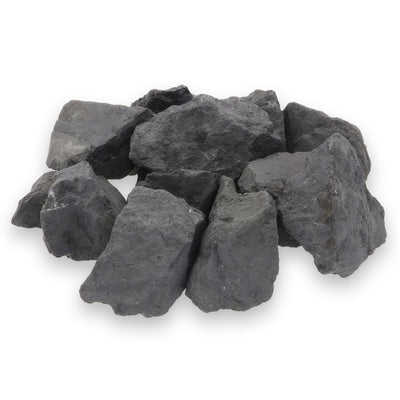
Shungite is not a classic crystalline mineral, but a carbon mineraloid — a rock made almost entirely of elemental carbon. Mineralogically, it is a true special case and related to stones such as graphite or anthracite, but much older and more complex in structure. With a Mohs hardness of only 3.5, shungite is relatively soft and can leave marks on your fingers.
What makes shungite spectacular: it contains the world’s only naturally occurring mineral with so-called fullerenes — spherical carbon molecules (C60), whose discovery was awarded the Nobel Prize in Chemistry in 1996. This special carbon structure also makes shungite electrically conductive — a property you would not expect from a black stone and at the same time the best authenticity test (more on that below).
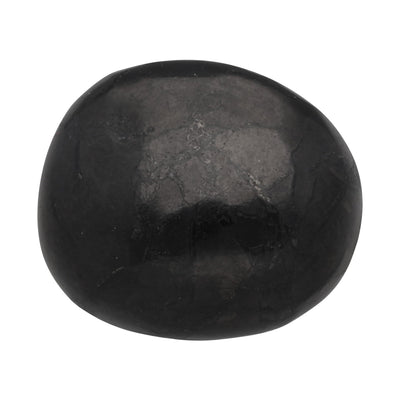
In trade, two qualities are roughly distinguished: elite shungite (Type I) is silvery glossy, very rare, with a carbon content of around 90–98% — it is brittle and fragile. The much more common black shungite (Type II/III) is matte to silky black, with about 30–65% carbon, and is used for most tumbled stones, spheres, pyramids, and pendants.
At around two billion years old, shungite is one of the oldest rocks used in crystal healing — it formed at a time when there was still no higher life on Earth. The world’s only major deposit is located in Karelia in northwestern Russia, around Lake Onega.
Meaning & history
Shungite owes its name to the small Karelian village of Shunga on Lake Onega, where the rock was first mined on a larger scale. Long before that, people in the region used the black spring water flowing through shungite deposits — they called it “living water” and attributed cleansing powers to it.
Shungite became famous through Tsar Peter the Great: in 1719 he founded Russia’s first spa in Karelia — the “Marcial Waters” — and had his soldiers drink the spring water filtered through shungite. According to tradition, he ordered every soldier to carry a piece of shungite to purify drinking water during military campaigns.
In modern crystal healing, shungite is now one of the most popular protection and grounding stones — especially known for two traditional uses: preparing shungite water and the supposed protection against “electrosmog.” Even though the latter is not scientifically proven, shungite is one of the most searched-for stones in the digital age.
Supposed effects of shungite on the psyche
When someone asks us for a stone for “energetic shielding,” against the feeling of constant sensory overload, or simply for more groundedness, the name shungite almost always comes up. In crystal healing, it is said to have the following effects:
- Protection & shielding: Shungite is considered — similar to Black Tourmaline — a powerful protection stone. It is said to ward off negative influences and provide a sense of energetic safety.
- Grounding & stability: As a classic root chakra stone, shungite is said to ground, center, and create a feeling of “arriving in the here and now” — especially after hectic, overly mental phases.
- Inner cleansing & clarity: Traditionally associated with dissolving stressful thought patterns and an “energetic deep clean.”
- Calm in times of sensory overload: It is said to help people become calmer and more composed in an overstimulated, digital world — a popular companion for sensitive people.
- Drive & vitality: Associated with renewed energy, vitality, and the release of feelings of exhaustion — grounding that does not make you tired, but stable.
- Protection from electrosmog: The best-known traditional use: shungite near the router, laptop, smartphone, or bed. Note: there is no scientific evidence that stones shield or influence electromagnetic fields.
Shungite is therefore especially suitable for phases in which protection, grounding, inner clarity, or peace from sensory overload are important — and for people who work a lot with screens or quickly feel “overloaded.”
Supposed effects of shungite on the body
In traditional crystal healing, shungite is attributed the following physical effects — these statements come from traditional descriptions and are not a substitute for medical diagnosis or treatment.
- Detoxification & cleansing: In folk healing, traditionally associated with cleansing, “de-sludging” properties — especially through shungite water.
- Skin: Shungite water is traditionally used externally for washing blemished or irritated skin.
- Immune system & vitality: Associated with a strengthening, invigorating effect on general resilience.
- Restful sleep: Placed next to the bed, shungite is said to promote calmer sleep — especially for people who absorb a lot of digital stimuli.
- Metabolism & energy: Traditionally associated with balanced energy levels and the reduction of exhaustion.
- Antioxidant tradition: The fullerenes it contains are attributed antioxidant properties in research — however, health-related healing effects have not been proven.
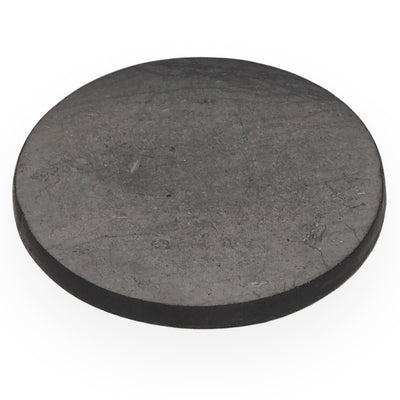
Shungite is the classic stone for shungite water: for this, only polished shungite is used (raw shungite leaves marks and crumbles). In crystal healing, polished shungite stones are placed in a carafe of water for a few hours. Important: this is a traditional use, not a medical treatment. You can find polished shungite stones for gemstone water in our shungite range.

Shungite and the chakras
In chakra teachings, shungite is clearly assigned to the root chakra (Muladhara) — the lowest energy center at the tailbone, which stands for security, basic trust, grounding, and being “anchored in the body.” Its deep black color and great age reinforce this grounding and protective quality in crystal healing thought.
In practice, shungite is placed on the tailbone during meditation or between the feet — to direct energy downward and create a feeling of roots, ground, and stability. Worn as a tumbled stone in a pocket or as a pendant, it is also said to have a grounding and protective effect throughout the day.
Some sources additionally assign shungite to the earth star chakra below the feet — the energy point that establishes the connection to the Earth. This makes it one of the most grounding stones of all.
Shungite & the 7 main chakras
Shungite is a classic root chakra stone — it is said to stabilize the foundation energy center and provide deep grounding, security, and protection.
Shungite and the zodiac signs
Astrologically, shungite is primarily associated with Capricorn — the earthy, steady Saturn sign. It is said to help Capricorn deepen its natural groundedness and protect itself from overload and energetic stress.
As a secondary stone, it is suitable for Scorpio (protection, transformation, letting go) and Cancer (boundaries for especially sensitive, receptive people). As a universal protection and grounding stone, however, shungite suits every zodiac sign — especially people who often feel overstimulated or “ungrounded.”
Using shungite in everyday life
1. As shungite water — the classic use
Place a few polished shungite stones in a carafe of water for 4–8 hours (or overnight). Never use raw shungite — it leaves marks and crumbles. Rinse the polished stones well before first use. A traditional use with a long history, not a medical treatment.
2. As jewelry — your all-day companion
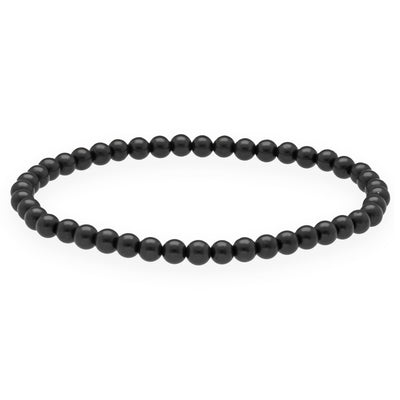
A shungite pendant or bracelet is the easiest way to wear the stone on your body all the time. Because of its low hardness (3.5), handle it a little more carefully than harder stones — protect it from impacts and scratches.
3. At work & on devices — as room protection
Very popular: a shungite cube or pyramid next to the router, laptop, or TV. It is said to “harmonize” the room’s energy. Note: this is not associated with any scientifically proven protection against electrosmog.
4. In meditation — for deep grounding
Hold shungite in both hands or place it between your feet. It is said to quickly bring back a feeling of ground, calm, and security, especially after overstimulating, overly mental days.
5. In the bedroom — for restful sleep
A shungite tumbled stone on the bedside table is traditionally used for more restful sleep — especially for people who spend a lot of time in front of screens in the evening.
Shungite bei Lebensquelle Plus
Echte Naturqualität — versandfertig aus Waldbröl, geprüfter Fachhandel.
Cleaning and charging shungite
Cleaning & charging shungite
Shungite is easy to care for, but due to its low hardness (3.5) it has one special feature: it can leave marks.
Discharge
Rinse under running lukewarm water — shungite tolerates water without any problem. Important: use a dark surface when cleaning, as raw shungite can leave marks. Then dry thoroughly.
Alternative: smudging with sage or Palo Santo — gentle and suitable for any shungite.
Charge
Charge in the sun or on a clear quartz / amethyst cluster — both are proven methods. Shungite is insensitive to light and does not fade.
Alternative: leave it overnight on a clear quartz cluster — keeps the stone fresh long-term.
⚠️ Shungite is soft (hardness 3.5) and leaves marks — use a dark surface, protect from impacts & scratches, no salt water. For gemstone water, use only polished shungite, never raw.
Recognizing authenticity
Unfortunately, shungite is often counterfeited — especially expensive elite shungite. These features will help you recognize genuine shungite:
- The conductivity test is the safest: Genuine shungite conducts electricity. You can test this with a small battery, two wires, and an LED — with genuine shungite the LED lights up, while with glass or a dyed imitation it stays dark.
- Leaving marks: If you rub raw shungite over white paper, it leaves a matte black, graphite-like streak. Glass imitations or synthetic resin do not do this.
- Weight & feel: Genuine shungite is surprisingly light for its size and feels matte-warm, not smooth-cool like glass or obsidian.
- Elite shungite (Type I): silvery glossy, very brittle and expensive — it is especially often counterfeited with ordinary black shungite or plastic. Here, the conductivity test is particularly worthwhile.
- Confusion with obsidian: Obsidian is glassy and translucent at the edges, while shungite is matte to silky and completely opaque.
Genuine shungite is matte black, light, conducts electricity, and leaves marks. At Lebensquelle Plus, shungite comes from verified natural quality from Karelia — no imitations, no synthetic resin, no dyed materials.
Combining shungite with other stones
- Shungite + clear quartz — clear quartz clarifies and amplifies — the classic for charging shungite and for a “pure” protection set.
- Shungite + Black Tourmaline — double protection and double grounding — the two great black protection stones complement each other perfectly.
- Shungite + hematite — enhanced grounding — both draw energy downward, good for scattered, “ungrounded” phases.
- Shungite + amethyst — grounding meets calm — shungite protects and grounds, amethyst soothes the mind. A popular meditation combination.
- Shungite + rose quartz — protection with a soft heart — said to create boundaries without becoming hard.
- Shungite + selenite — pure cleansing — selenite is considered self-cleansing, shungite protective; often combined for energetic room clearing.
Frequently asked questions about the effects of shungite
01 What does shungite do? +
In crystal healing, shungite is considered a powerful protection and grounding stone. It is said to shield energetically, ground, bring inner clarity, and provide calm in times of sensory overload. It is also known for traditional shungite water and the supposed — scientifically unproven — protection against electrosmog.
02 How do you make shungite water? +
Place a few polished shungite stones in a carafe of water for 4–8 hours (or overnight). Use only polished shungite — raw shungite leaves marks and crumbles. Rinse the stones well before first use. Shungite water is a traditional use, not a medical treatment.
03 Does shungite really protect against electrosmog? +
This is the most commonly mentioned use, but it is not scientifically proven: gemstones do not measurably shield electromagnetic fields. In crystal healing, shungite is still traditionally recommended near routers, laptops, or smartphones. However, it is not a substitute for technical solutions when it comes to actual EMF exposure.
04 What is the difference between elite shungite and regular shungite? +
Elite shungite (Type I) is silvery glossy, very rare and expensive, with 90–98% carbon — it is brittle and fragile. Regular black shungite (Type II/III) is matte to silky black, with 30–65% carbon, and is used for most tumbled stones, spheres, and pendants. Both are genuine shungite.
05 How do I recognize genuine shungite? +
The safest test is electrical conductivity: genuine shungite conducts electricity — this can be checked with a battery, two wires, and an LED (the LED lights up). In addition, raw shungite leaves a matte black mark on white paper, is surprisingly light, and feels matte, not glassy like obsidian.
06 Can shungite be put in water? +
Yes — shungite tolerates water without any problem and is even specifically used for shungite water. Important: for gemstone water, use only polished shungite, as raw shungite leaves marks and crumbles. When cleaning, use a dark surface and dry the stone thoroughly afterward.
07 How do I care for shungite properly? +
Cleaning: briefly under running water (dark surface, as it leaves marks) or by smudging. Charging: in the sun or on a clear quartz or amethyst cluster — shungite is insensitive to light. Avoid: impacts and scratches (hardness only 3.5), no salt water. Full guide: Cleaning and charging gemstones.
08 Is shungite toxic? +
No. Shungite consists mainly of carbon and is considered safe. For shungite water, however, you should still use only polished shungite of verified quality and pay attention to cleanliness. Raw shungite is not suitable for gemstone water because it leaves marks.
09 Which stones go well with shungite? +
Classic combinations: shungite + clear quartz (clarity & charging), shungite + Black Tourmaline (double protection), shungite + hematite (enhanced grounding), shungite + amethyst (grounding & calm), shungite + selenite (energetic cleansing).
10 Where does shungite come from? +
The world’s only major deposit is in Karelia in northwestern Russia, around Lake Onega — named after the village of Shunga. The rock is around two billion years old and thus one of the oldest materials used in crystal healing.
Conclusion
Shungite — the ancient protection and grounding stone from Karelia. Around two billion years old, the only mineral containing fullerenes, electrically conductive, and inseparably linked with traditional shungite water. Anyone looking for a powerful, unusual grounding stone for an overstimulated digital world will find a fascinating companion in shungite.
In our shungite range ↗, you’ll find tumbled stones, polished stones for gemstone water, spheres, pyramids, and jewelry made from genuine Karelian natural quality — ready to ship from Waldbröl or directly on site in our store in Nümbrecht.
Important note: The effects described here come from traditional crystal healing and are not scientifically proven. They do not replace medical diagnosis or treatment. If you have health concerns, please consult a doctor.
Further gemstone guides
- Clear Quartz effect — meaning, use & cleansing
- Amethyst effect — meaning, use & cleansing
- Cleaning and charging gemstones — the easy way
- Black Tourmaline effect — the second great protection stone
- Hematite effect — the grounding partner to shungite
- Obsidian effect — protection & shadow work
- View all shungite products