


Rhodochrosite — the “Inca rose” — shines in warm pink to raspberry red, streaked with soft white bands. In crystal healing, it is considered one of the most important heart stones for self-love, joy of life, and emotional healing. In this guide, you’ll find everything about the purported effects of Rhodochrosite, its meaning, uses, and proper care (it is soft and does not like sun!) — compiled by a specialist retailer.
Rhodochrosite — quick facts at a glance
| Mineral class | Carbonate — manganese carbonate (MnCO₃) |
| Color | pink to raspberry red, usually with white bands |
| Hardness (Mohs) | 3.5 to 4 — soft |
| Crystal system | trigonal |
| Chakra | Heart chakra (Anahata) |
| Zodiac sign | Scorpio (main), Leo, Cancer |
| Element | Fire / Water |
| Special feature | “Inca rose” — typical concentric banding |
| Suitable for gemstone water | NO — too soft, reacts with acid |
| Sunlight | NO — the color may fade |
| Main sources | Argentina, Peru, USA (Colorado), South Africa |
What is Rhodochrosite? Mineralogy and origin
Rhodochrosite is a manganese carbonate (MnCO₃). The manganese it contains gives it its characteristic color: from delicate pink through salmon to rich raspberry red. Its name comes from the Greek rhodon (rose) and chros (color) — “rose-colored”.
Its typical identifying feature is its concentric banding in pink and white. It forms when the stone grows in layers as a stalactite in caves — when cut across, the famous ring pattern appears, which earned it the name “Inca rose” (Rosa del Inca).
With a Mohs hardness of only 3.5 to 4, Rhodochrosite is soft and delicate. As a carbonate, it also reacts with acids. The most famous sources are the Capillitas mine in Argentina, as well as Peru, Colorado (USA), and South Africa.
Meaning & history
In the Inca Empire, Rhodochrosite was regarded as a sacred stone — tradition calls it “blood of the ancestors” or “rose of the Inca”. The old silver mines of the Andes yielded the first large pieces.
In Argentina, it is now the national stone; the banded stalactite slices from Capillitas are considered the most beautiful specimens worldwide.
In modern crystal healing, Rhodochrosite is the stone of loving self-connection — it is traditionally used where self-acceptance, old emotional baggage, and rediscovered joy of life are the focus.
Purported effect of Rhodochrosite on the psyche
When someone asks us for a stone for the self heart — self-love instead of always being there for others — Rhodochrosite is our typical recommendation. In crystal healing, the following effects are attributed to it:
- Self-love & self-acceptance: The classic — Rhodochrosite is said to help you be kinder and more compassionate toward yourself.
- Opening the heart: Said to open the heart to closeness, affection, and new relationships.
- Joy of life & lightness: Associated with cheerfulness, spontaneity, and a warm basic mood.
- Emotional healing: Traditionally used for old sorrow and emotional wounds.
- Inner child: Said to make access to playfulness, creativity, and carefree aspects easier.
- Courage with feelings: Described as a stone that encourages allowing and showing feelings.
Rhodochrosite is therefore especially suitable for phases in which self-worth, old emotional baggage, grief, or lost joy of life are the topic — and for people who are always there for everyone, just not for themselves.
Purported effect of Rhodochrosite on the body
In traditional crystal healing, the following physical effects are attributed to Rhodochrosite — these statements come from traditional descriptions and are not a substitute for medical diagnosis or treatment.
- Heart & circulation: In folk healing, traditionally associated with the heart area and a warm circulation.
- Nerves & tension: Traditionally passed down as a calming stone for nervous restlessness.
- Metabolism: In older descriptions, linked to an active metabolism.
- Skin: Traditionally associated with a healthy, well-perfused complexion.
- Migraine & head pressure: Mentioned in traditional descriptions for stress-related head pressure.
- Well-being: Considered a warming, uplifting companion in everyday life.
Rhodochrosite is not suitable for gemstone water — with a hardness of 3.5–4, it is too soft and, as a carbonate, reacts with acids. If you still want to combine its effect with water, use the indirect method (stone in a sealed glass vial in the water jug). Tumbled stones and pendants can be found in our Rhodochrosite range.

Rhodochrosite and the chakras
In chakra teachings, Rhodochrosite is clearly assigned to the heart chakra (Anahata) — the energy center for love, compassion, and self-acceptance. Its pink-red color fits this chakra perfectly.
Unlike the gentle rose quartz, Rhodochrosite is considered the warmer, more powerful heart stone: it is said not only to comfort, but also to move — dissolving old emotional blockages and bringing back joy of life.
In practice, Rhodochrosite is placed on the heart or worn as a pendant at heart level — as a reminder that self-care is not selfishness.
Rhodochrosite & the 7 main chakras
Rhodochrosite is a warm heart chakra stone — it is said to strengthen self-love, opening of the heart, and joy of life.
Rhodochrosite and the zodiac signs
Astrologically, Rhodochrosite is considered the main stone for Scorpio — the intense water sign, which it is said to help transform deep feelings instead of burying them.
As a secondary stone, it also suits Leo (warmth of heart, self-worth) and Cancer (emotional healing). As a stone of self-love, Rhodochrosite suits anyone who wants to take themselves seriously again.
Using Rhodochrosite in everyday life
1. As a pendant — directly at the heart
A Rhodochrosite pendant worn at heart level is said to remind you throughout the day of loving self-connection.
2. In meditation — heart work
Place the stone on the heart and breathe calmly. It is said to release emotional blockages and bring warmth.
3. In difficult times — as a comfort stone
Traditionally held in the hand during grief, heartbreak, or disappointment as a companion stone.
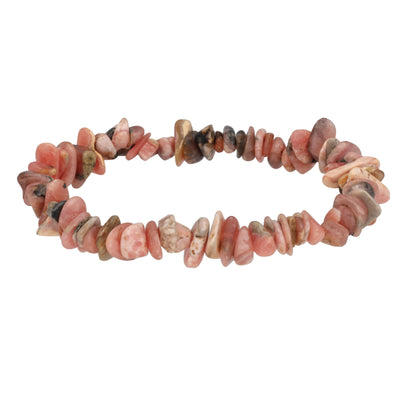
4. As a bracelet — joy of life in everyday life
A split-stone bracelet is said to bring lightness and good mood into the day. Protect from impacts — the stone is soft.
5. In the bedroom — for warmth of heart
A tumbled stone on the bedside table is often used for a gentle, loving start to the day.
Rhodochrosite bei Lebensquelle Plus
Echte Naturqualität — versandfertig aus Waldbröl, geprüfter Fachhandel.



Cleaning and charging Rhodochrosite
Clean & charge Rhodochrosite
With a hardness of 3.5–4, Rhodochrosite is soft, sensitive to acid, and light-sensitive — it needs especially gentle care.
Discharge
Only briefly rinse under lukewarm, running water and dry immediately. No acids (lemon, vinegar) and no chemical cleaners — it reacts to them!
Alternatively, discharge overnight in a bowl with hematite tumbled stones — completely without water.
Charge
Charge in moonlight or on a clear quartz cluster or amethyst geode.
A clear quartz cluster is the gentlest long-term solution — without light or water stress.
⚠️ NO sun — direct sunlight can cause the pink to fade. Soft (3.5–4): protect from scratches and impacts, no acids, no ultrasound. Not for gemstone water.
Recognizing authenticity
Rhodochrosite is confused with dyed calcite, rhodonite, and plastic. These features help:
- Banding: genuine Rhodochrosite shows soft, irregular, concentric bands in pink and white — never a perfectly uniform pattern.
- Do not confuse with rhodonite: Rhodonite is also pink, but has typical black manganese oxide veins and is significantly harder at 5.5–6.5.
- Hardness: Rhodochrosite is soft at 3.5–4 and can be scratched with a knife tip. It does not scratch glass.
- Luster: typically a soft, pearly to waxy luster — not the hard glassy shine of imitations.
- Color: natural pink to raspberry red looks warm and slightly uneven. Bright, uniformly intense pink suggests dyed material.
Genuine Rhodochrosite shows warm pink tones with soft white banding and is significantly softer than glass. At Lebensquelle Plus, we focus on natural quality.
Combining Rhodochrosite with other stones
- Rhodochrosite + rose quartz — the heart duo — rose quartz comforts gently, Rhodochrosite moves and warms.
- Rhodochrosite + clear quartz — clear quartz clarifies and amplifies the heart-opening effect.
- Rhodochrosite + rhodonite — emotional healing in a double pack — rhodonite for forgiveness, Rhodochrosite for self-love.
- Rhodochrosite + amethyst — warmth of heart meets inner calm — popular for grief work.
- Rhodochrosite + sunstone — pure joy of life — for gray days and low moods.
Frequently asked questions about the effects of Rhodochrosite
01 What does Rhodochrosite do? +
In crystal healing, Rhodochrosite is considered a stone of self-love and joy of life. It is said to open the heart, release old emotional baggage, and bring lightness and warmth back into everyday life. As a heart chakra stone, it is especially used for self-worth issues and after hurt.
02 Why is Rhodochrosite called Inca rose? +
Because it was regarded as a sacred stone in the Inca Empire and its cut stalactites show a pink-and-white ring pattern reminiscent of a rose blossom. In Spanish, it is therefore called Rosa del Inca. In Argentina, the most important source country, it is the national stone.
03 What is the difference between Rhodochrosite and rhodonite? +
Both are pink, but easy to tell apart: Rhodochrosite is a soft manganese carbonate (hardness 3.5–4) with white banding. Rhodonite is a much harder manganese silicate (5.5–6.5) with characteristic black veins. In crystal healing, Rhodochrosite is considered the stone of self-love, rhodonite the stone of forgiveness.
04 Can Rhodochrosite go in the sun? +
No. Direct sunlight can cause the pink to fade over time. For charging, use moonlight or a clear quartz cluster and do not leave the stone permanently on a sunny windowsill.
05 How do I care for Rhodochrosite properly? +
Only briefly rinse under lukewarm water and dry immediately. Charge in moonlight or on a clear quartz cluster. Avoid: sun, acids, chemical cleaners, ultrasound, and hard impacts — the stone is soft and delicate. Complete guide: Clean and charge gemstones.
06 Which zodiac sign is Rhodochrosite for? +
Rhodochrosite is mainly assigned to Scorpio, which it is said to help transform deep feelings. As secondary stones, it suits Leo and Cancer. As a stone of self-love, however, it suits anyone who wants to take themselves more seriously again.
07 Which stones go well with Rhodochrosite? +
Classic combinations: Rhodochrosite + rose quartz (heart duo), Rhodochrosite + rhodonite (emotional healing), Rhodochrosite + clear quartz (amplification), Rhodochrosite + amethyst (grief work), Rhodochrosite + sunstone (joy of life).
08 Is Rhodochrosite suitable as a gift? +
Very much so — Rhodochrosite is a warm-hearted gift for people who are carrying a lot for others or have been through a difficult time. As a pendant or tumbled stone, it stands for self-love, comfort, and renewed joy of life.
Conclusion
Rhodochrosite — the Rose of the Inca. In crystal healing, the warm, powerful heart stone for self-love, emotional healing, and rediscovered joy of life. Anyone who is always there for everyone, but not for themselves, will find a very friendly companion in it — it just needs a little protection from sun, acid, and impacts.
In our Rhodochrosite range ↗ you’ll find tumbled stones, pendants, and bracelets in genuine natural quality — ready to ship from Waldbröl or directly on site in our store in Nümbrecht.
Important note: The effects described here come from traditional crystal healing and are not scientifically proven. They do not replace medical diagnosis or treatment. If you have health concerns, please consult a doctor.
Further gemstone guides
- Clear Quartz effect — meaning, use & cleansing
- Amethyst effect — meaning, use & cleansing
- Clean and charge gemstones — the easy way
- Rose Quartz effect — the gentle heart stone
- Rhodonite effect — forgiveness & healing
- View all Rhodochrosite products